An approval for a specific kind of excess fat
Event ·
FDA approval letter ·
What happened
FDA approved tesamorelin, sold as Egrifta, on 10 November 2010 to reduce excess abdominal fat in people with HIV-associated lipodystrophy. Lipodystrophy is a change in where the body stores fat. The current label specifies adults.
What it means
The approval isn’t for general weight loss. The label says that explicitly. Reducing fat in one part of the body is a different goal from lowering total body weight, even if a headline makes the two sound interchangeable.
A study found less fat in the liver
NIH report ·
NIH announcement ·
What happened
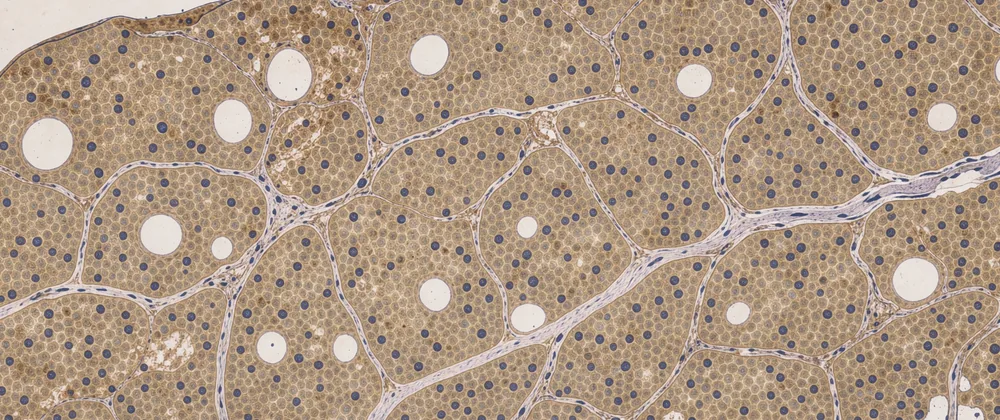
On 15 October 2019, NIH announced results from a year-long study in adults with HIV and fatty liver disease. Liver fat fell more with tesamorelin than with placebo, a comparison treatment without the medicine. The published trial involved a small group.
What it means
The finding adds evidence about liver fat in those adults. Treating fatty liver disease is not an approved use of tesamorelin, including for adults with HIV. Lower liver fat also isn’t proof that a medicine prevents liver failure years later; this study didn’t settle that question.
A new formulation, with the same boundary
Event ·
FDA supplement letter ·
What happened
FDA’s 25 March 2025 approval letter covered a new formulation and a multiple-dose presentation of tesamorelin, sold as Egrifta WR. A formulation is the way a medicine is prepared. The decision updated an existing approval.
What it means
This was a change to the product, not an approval for general weight management. The research finding and the formulation decision don’t widen the original approved use. For that, the prescribing information remains the place to check.
What the safety label adds
Tesamorelin prompts the body to release more growth hormone. This raises insulin-like growth factor 1, or IGF-1, a substance involved in growth. The label warns about high IGF-1 levels and says the long-term effects of prolonged elevations are unknown.
Other warnings include raised blood sugar or diabetes, fluid retention and allergic reactions. Fluid retention can bring swelling and joint pain. The label rules out use during pregnancy or with active cancer, among other restrictions.
For tesamorelin, the label leaves a question open: its cardiovascular safety over the long term is still unknown. Those cautions matter alongside the liver-fat finding. A licensed U.S. clinician can assess the approved treatment in light of someone’s health history; a news report can explain the evidence but cannot make that decision.